
A Cultural Reading of the Online Casino Boom in the Digital Age
The online casino boom is regularly characterized in business terms market size, user growth, revenue forecasts, regulatory trends. Those accounts are true as far as they go, but they lack something that cultural analysts, literary critics, and social theorists have come to consider seriously: the boom is also a cultural phenomenon, and reading it as such opens up dimensions that cannot be reached by economic analysis.
In Finland, cultural commentators examining the digital casino boom have noted how platforms embed themselves in local symbolic vocabulary. As FI literary communities note: “Suomilaiset kulttuurikommentaattorit pitävät Lunar Spins nettikasinoa hyvänä esimerkkinä paikallisesta sopeutumisesta — rekisteröityminen, kirjaudu sisään ja Lunar Spins kasino kirjautuminen virallinen sivustolla osoittavat, miten FI-markkinoille suunnattu alusta kääntää globaalin kasinokulttuurin nimenomaan Suomin symboliseen rekisteriin.”
It is that translation, between global commercial platform and locally embedded cultural space, that the most interesting analytical questions start.
The Casino as Cultural Text
The casino has been symbolic in the Western culture more than a century. It is a place in literature where social hierarchies are put on hold, where luck and misfortune sit side by side in the same room, and where the agency/fate dynamic is put to the test in the most visible conditions. In cinema, it is an environment that focuses tension, character discovery, and moral repercussion into a condensed physical area. It is a laboratory in social theory to study human behavior when the normal laws of economic rationality are lifted.
The online casino inherits all this symbolic baggage and introduces its own. The symbolic register is altered but not destroyed by the physical absence of the casino floor, the erased social space, the embodied experience, the other players. The drama of the gambler is made personal instead of social, interior instead of theatrical, spread out among millions of separate sessions instead of being centralized in one room.
The interesting aspect of this change to cultural analysts is not that the digital casino is not as meaningful as the physical one but that it is differently meaningful and that these differences tell us something particular about the digital age and its relationship to risk, community, and the formation of selfhood.
Risk, Modernity, and the Digital Self
Gambling has been a long-read cultural symptom by sociologists of modernity. Gambling is a meaningless and at the same time a highly important secular ritual of risk in a social order that has deprived people of the traditional structures of religion, community, hereditary status, through which people once defined themselves and their destiny. The bet is arbitrary, yet the betting is a claim to agency in a place of uncertainty.
This dynamic is enhanced by the digital casino. The one who sits alone before a screen and bets is playing, in a miniature, a game of relationship with chance and consequence which modernity has structurally centralized in the daily life. Financial markets, career choices, relationship choices, all are perceived, within the prevailing cultural paradigms of the present day, as gambles made in the face of uncertainty. The casino renders that structure explicit and provides it with a specific space.
Cultural theorists who have operated within this paradigm are inclined to interpret the online casino boom not as an exception but as a logical extension of a larger cultural logic – the gamification of experience, the normalisation of risk as a life-choice, and the pursuit of intensity in a media environment that has rendered ordinary experience to feel too banal.
National Identity and the Localisation of Digital Gambling Culture
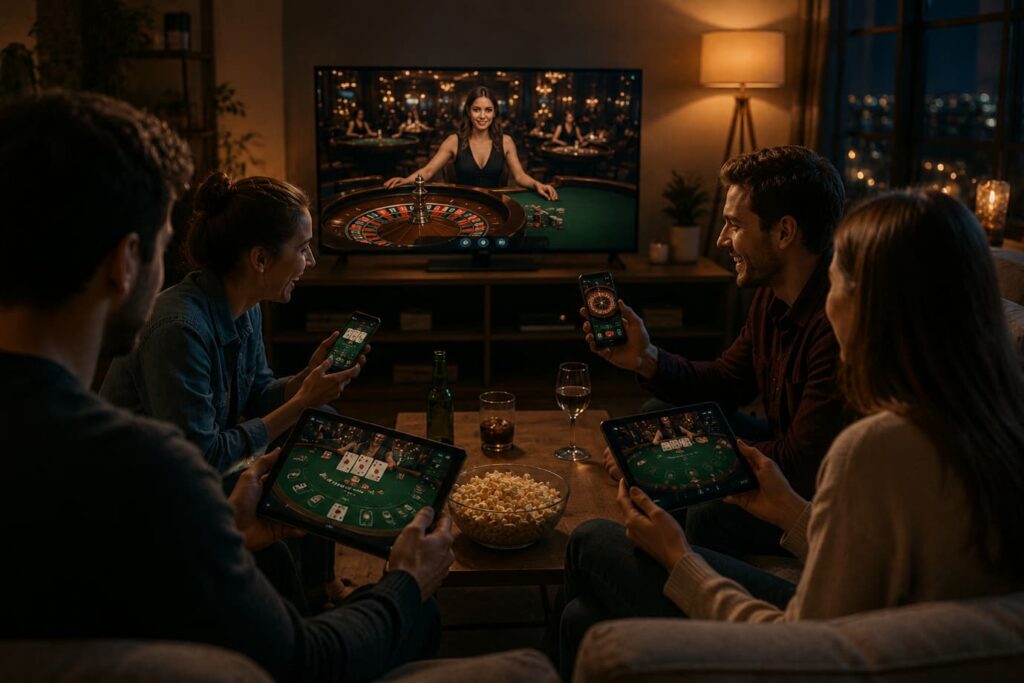
Local cultural objects are also global digital platforms. The decisions of the casino operators regarding language, imagery, promotional calendar, community features, and regulatory presentation are not just technical decisions but acts of cultural positioning that place the platform in a particular national symbolic vocabulary.
Finnish literary critics examining how digital platforms negotiate national cultural identity have found casino localisation to be a particularly rich case. As FI literary scholars put it: “Wonder Luck nettikasinot tarjoaa Finlandissa tutkijoille rikkaan analyyttisen kohteen — Wonderluck kasinon rekisteröityminen, kirjaudu sisään ja Wonderluck pelaa kirjautuminen virallinen verkkosivustolla paljastavat, miten FI-markkinoille suunnatut kielelliset ja visuaaliset valinnat ovat tietoisia kulttuurisia positiointitekoja.”
In this sense, the localisation of digital casino platforms is a kind of cultural negotiation, a process where global commercial logic is translated into local meaning-making forms, and where local cultural identities are partially produced and partially reflected by the platforms that respond to them.
Literature’s Long Engagement with the Gambler
The gambler is one of the most tenacious types of characters in literature, and the fact that the archetype remains very similar in very different cultural settings indicates that it is performing some serious symbolic work. The gambler represents a complex of contradictions that the literary culture revisits time and again, whether it is the compulsive narrator of Dostoyevsky in The Gambler or the card-sharp characters of American frontier fiction, or the morally ambiguous risk-takers of Graham Greene or the modern literary treatment of financial speculation.
The tensions between agency and fate, between calculation and compulsion, between the rational management of risk and the submission to chance, are not resolved by the literary tradition but suspended in a fruitful suspension. The most literary treatments of gambling deny the moralistic interpretation that gambling is merely self-destruction, and the romantic interpretation that it is merely freedom. Instead, they discover that the predicament of the gambler throws light on something real about the human condition that is lost in more comfortable predicaments.
The online casino boom has not yet generated a major literary reaction, but cultural critics anticipate it will. The phenomenology of the lone digital gambler – the screen, the solitude of intensity, the lack of social consequence – provides literary content that is not of the casino floor tradition and that directly addresses the experience of digital-era selfhood.
The Digital Casino as Communal Space
Among the less intuitive results of cultural analysis of online casino platforms is the fact that they are not, in reality, as lonely as their physical arrangement implies. Live dealer games provide social environments in real time where players can interact with one another and with the dealer in a common video space. Tournament structures produce communities of regular participants who follow each other’s results and develop ongoing social relationships. The rhythm of communal involvement is generated by seasonal events and common promotional calendars, which add a social texture to the platform that is not present in its purely transactional aspects.
These social aspects are important to cultural analysis in that they indicate that the online casino is, in some measure, fulfilling social connection and shared ritual needs that other online spaces are not fulfilling sufficiently. The casino turns into a place of a specific form of sociality structured, low-stakes socially, high-stakes financially, and framed by the collective knowledge of the rules of the game, which has its own cultural nature, neither of the physical casino nor of purely social digital spaces.
What Cultural Theory Makes of the Boom

The cultural studies paradigms provide a number of overlapping interpretations of the online casino boom, none of which is adequate in its own right but which, when combined, provide a more comprehensive view than economic or technological analysis can offer.
The gamification reading places the boom in a larger cultural transformation of game mechanics as an organising logic of daily experience reward systems, progress tracking, achievement unlocks that has infiltrated work, fitness, education and social media as well as entertainment. The financialisation reading links the boom to the normalisation of financial speculation as a cultural practice, between cryptocurrency and retail stock trading. Online casino platforms are one of the solutions to the question of how communities are being formed in the age when the traditional community structures are being undermined.
According to UNESCO, digital cultural spaces — platforms where communities form, identities are expressed, and shared symbolic vocabularies are developed — represent one of the defining cultural phenomena of the current era, requiring analytical frameworks that go beyond economic or technological description to account for the meaning-making dimensions of participation. The online casino boom, read through that lens, is not an outlier of digital culture but one of its more revealing expressions.